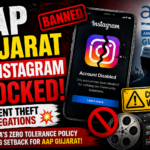





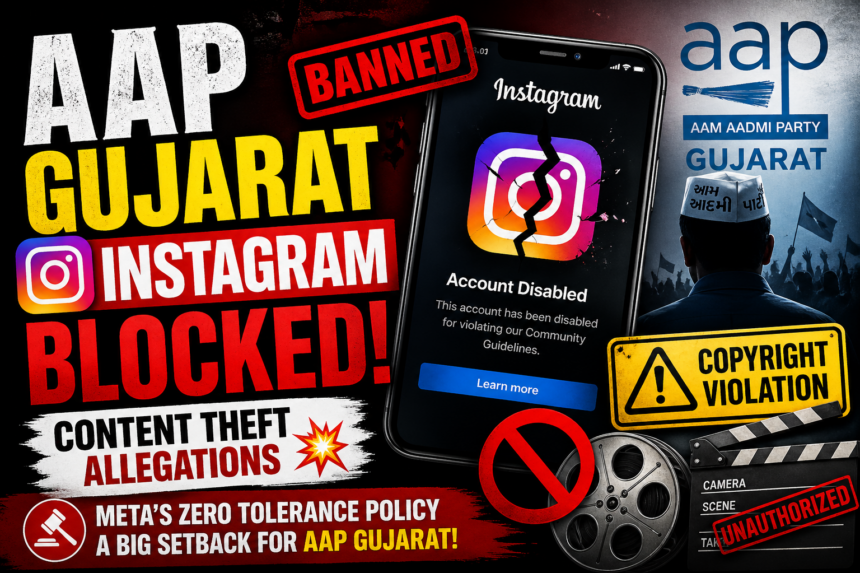
In a significant blow to the Aam Aadmi Party (AAP) in Gujarat, the tech giant Meta has officially blocked the party’s verified Instagram handle. The action comes following a string of serious allegations regarding intellectual property theft and the unauthorized use of creative content belonging to the Gujarati film industry.
The Root of the Conflict
The controversy erupted when several filmmakers and production houses noticed their cinematic clips, dialogues, and music being repurposed in AAP Gujarat’s political reels and promotional videos. While political parties often use trending audio to reach younger demographics, they are still bound by Digital Millennium Copyright Act (DMCA) regulations.
According to industry insiders, the party allegedly failed to secure the necessary licensing or permissions from the original creators. This prompted the copyright holders to file formal complaints with Meta, citing a blatant violation of creative rights for political leverage.
Meta’s “Zero Tolerance” Stance
Following a review of the reported content, Meta enforced its strict copyright policy, resulting in the immediate suspension of the account. This move effectively erases—at least temporarily—the party’s digital footprint on a platform where they had built a substantial following. For a party that relies heavily on “viral” marketing and digital activism, losing access to an established audience of lakhs is a massive strategic setback.


Timing and Implications
The timing of this block is particularly critical. With political campaigning becoming increasingly digital-first, the loss of a primary communication channel hampers the party’s ability to counter narratives and engage with voters in real-time.
While the AAP Gujarat social media team is reportedly in talks with the platform to appeal the decision or “sanitize” their feed to regain access, the incident has sparked a broader debate. Local film industry advocates are calling this a victory for intellectual property rights, sending a clear message that even high-profile political entities are not above the law when it comes to content ownership.